This glossary explains the terms that come up when reading about personal AI agents in 2026, from approval gates to SOUL.md. Definitions are short and plain-English, grouped by topic, and draw on official documentation and our research. Where a term has its own explainer, we link to it.
- Terms defined
- 38
- Topic groups
- 6
- Last reviewed
- Nov 2026
The basics
Personal AI agent
An AI system that acts on your behalf across your accounts (email, calendar, shopping, messaging), rather than only answering questions. Examples include Meta Muse, OpenAI dots, Claude Duet, Grok Bot, Gemini Spark and OpenClaw. Full explainer: what is a personal AI agent.
AI assistant
Software that responds to requests one at a time and waits for your next instruction, such as a chatbot or classic voice assistant. Compare in AI assistant vs AI agent.
Proactive agent
An agent that starts actions or suggestions without being asked, such as flagging an unpaid invoice or following up on a thread. Claude Duet's morning brief is an example. Proactivity addresses the "blank page" problem of not knowing what to ask.
Always-on or persistent agent
An agent with long-lived memory and scheduled routines that continues projects across days, even when your devices are off.
Research preview or waitlist
A limited, early-access release, often restricted by region. Claude Duet launched as a US-only research preview with a waitlist.
How agents run
Cloud VM agent
An agent that runs on a dedicated virtual machine in the provider's cloud, so it keeps working 24/7 with your devices off. Meta Muse, OpenAI dots, Claude Duet, Grok Bot and Gemini Spark all work this way.
Computer-use agent
An agent that operates a graphical computer by seeing the screen and clicking and typing, so it can use any app or website without an API. Grok Bot leans heavily on computer use.
Local-first or self-hosted agent
An agent that runs on hardware you control and keeps memory and configuration on your disk. OpenClaw and Hermes Agent are examples. See the OpenClaw review.
Harness
The scaffolding around a model, including instruction files, tool definitions and the decision loop, that turns it into an agent. Gemini Spark uses Google's Antigravity harness.
SOUL.md
OpenClaw's persona and instruction file, which sets the agent's personality and rules. Near-identical files found in Meta Muse fuelled reports that Muse was modelled on OpenClaw.
Gateway
In OpenClaw, the local background process that bridges your messaging apps and the agent. It listens on port 18789 by default and should never be exposed to the public internet.
Takeover
A feature that lets you step in and control the agent's browser yourself, typically for passwords, two-factor codes, CAPTCHAs or payments. OpenAI dots and Grok Bot offer it.
Model picker
A setting that lets you choose which AI model the agent uses. Most hosted 2026 agents, including Claude Duet and Grok Bot, have none. OpenClaw lets you pick any model.
Connections
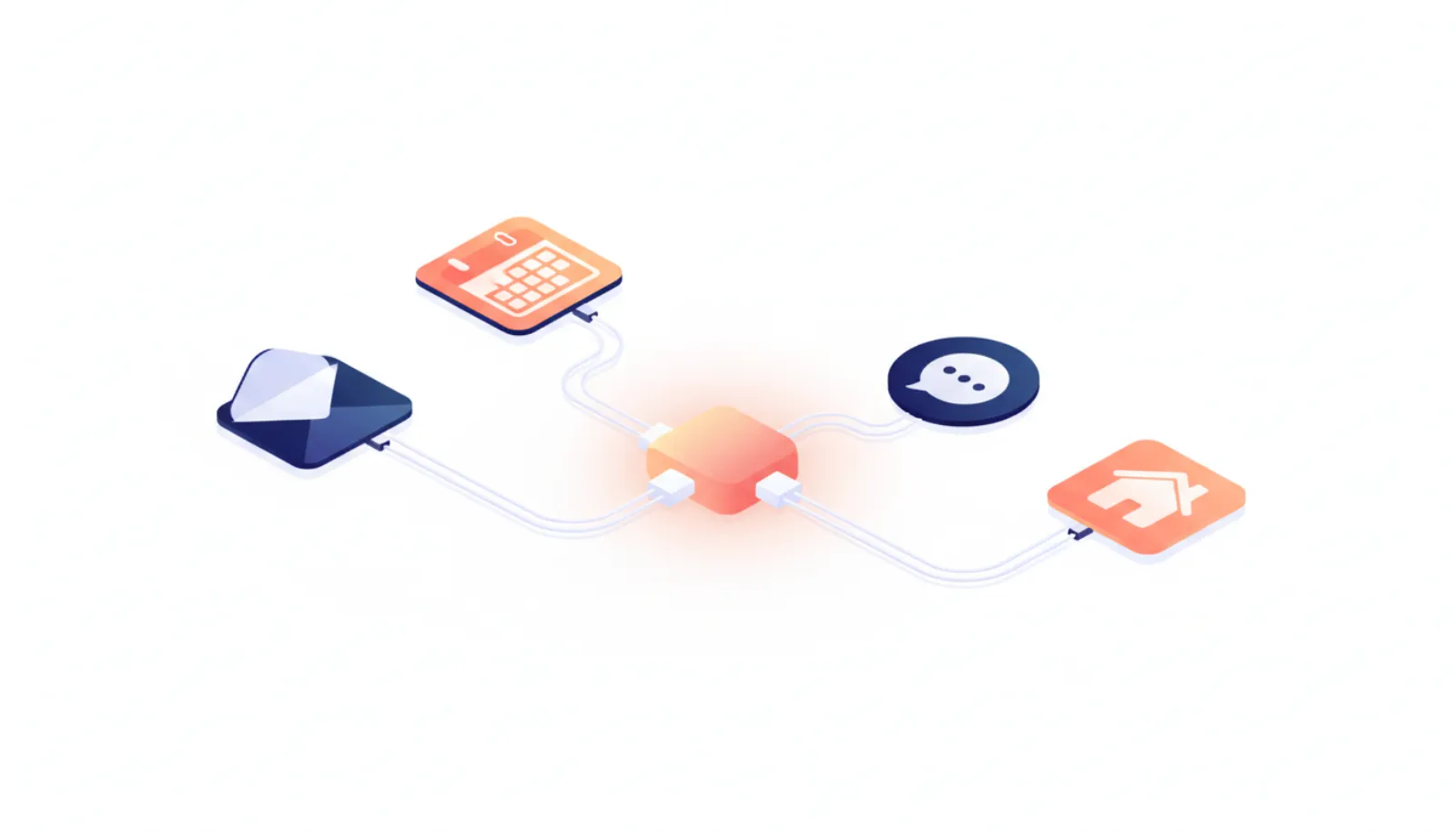
- Agent
- Connector or skill
- MCP server
- App or data
MCP (Model Context Protocol)
An open protocol for connecting AI models and agents to tools and data sources. Anthropic donated it to the Linux Foundation's Agentic AI Foundation in December 2025, with OpenAI and Block as co-founders (IT Brief). See MCP and connectors explained.
Connector
A pre-built integration that grants an agent access to one service, such as Gmail, Calendar or Slack, often built as an MCP server.
Skill (SKILL.md)
A packaged set of instructions and scripts that teaches an agent how to do a task. Skill marketplaces like OpenClaw's ClawHub have proved to be a supply-chain risk.
Agent identity
A verifiable credential that identifies an agent, and the company operating it, to websites and services, separate from the human's identity.
Web Bot Auth
An IETF draft protocol in which agents cryptographically sign their web requests so sites can verify who operates them (IETF). It verifies the operator, not the human or what the agent is allowed to do.
Signed agent
Cloudflare's category for user-directed agents that sign requests with Web Bot Auth and follow its policy.
Safety and permissions
Approval gate (human-in-the-loop)
A checkpoint where the agent pauses for your explicit confirmation before a sensitive action such as sending email, buying or paying. Compare policies in agent approval rules compared.
Ask-first rules
User-defined policies listing which action types always need approval. OpenAI calls its version Custom Rules.
Sentinel
Meta Muse's separate security service. It runs outside the agent's container and returns allow, deny or ask for every connector action and network request. See Meta Muse Sentinel explained.
Surrogate token
A stand-in credential the agent sees in place of your real password or login token. A security service swaps in the real one at the network boundary, so the model never handles it. Meta Muse uses this approach.
Least privilege (scoped permissions)
Granting an agent only the minimum access it needs. The UK ICO lists it as a key control for agents. See AI agent safety and permissions.
Prompt injection
An attack in which instructions hidden in content the agent reads, such as emails, web pages or tool output, hijack its behaviour. Meta has acknowledged it is not fully solved. Full guide: prompt injection explained.
Indirect prompt injection
Prompt injection delivered through third-party data rather than typed by the user. It is the main risk for agents that read inboxes and browse the web.
Memory poisoning
Planting false or malicious data in an agent's long-term memory so it keeps acting on it later. Lab research called "MemGhost" (Zhang et al., arXiv, July 2026) showed one poisoned email could plant a persistent false memory (tested on mock users).
Lethal trifecta
The risky combination of access to private data, exposure to untrusted content, and the ability to act or communicate externally. Most personal agents have all three by design.
Agent control plane
Enterprise software to inventory, govern, audit and secure agents across a company. Microsoft Agent 365 is an example.
Payments
Agentic commerce
Shopping and payments started and completed by AI agents on behalf of users. See AI shopping agents.
Single-use virtual card
A card number created for one purchase, limited to one merchant and amount. Meta Muse and Claude Duet use them through Link by Stripe.
AP2 mandate
A cryptographically signed record in Google's Agent Payments Protocol that proves what a user authorised an agent to buy (VentureBeat).
ACP (Agentic Commerce Protocol)
The OpenAI and Stripe open specification for agent-to-merchant checkout and scoped payment credentials, released September 29, 2025.
Agentic token
A payment credential issued by a card network and bound to a specific agent and scope, such as Mastercard Agent Pay's tokens.
Payment passkey
Device-bound cryptographic authentication used to approve agent payments, such as Visa Payment Passkeys. More in AI agent payments explained.
Products and devices
Multi-agent phone
A phone that ships several AI agents with distinct roles and wake words. Samsung's Galaxy S26 combines Gemini, Bixby and Perplexity.
Muse Spark
Meta's AI model, which powers the Meta Muse agent. Not the same as the app: see Meta Muse vs Muse Spark.
Dot
OpenAI's name for an individual always-on agent in ChatGPT. Each dot has its own cloud computer. See the OpenAI dots review.
For how these pieces fit together, read how personal AI agents work. Messaging-specific risks are covered by smsaiagents.com on prompt injection via messages.