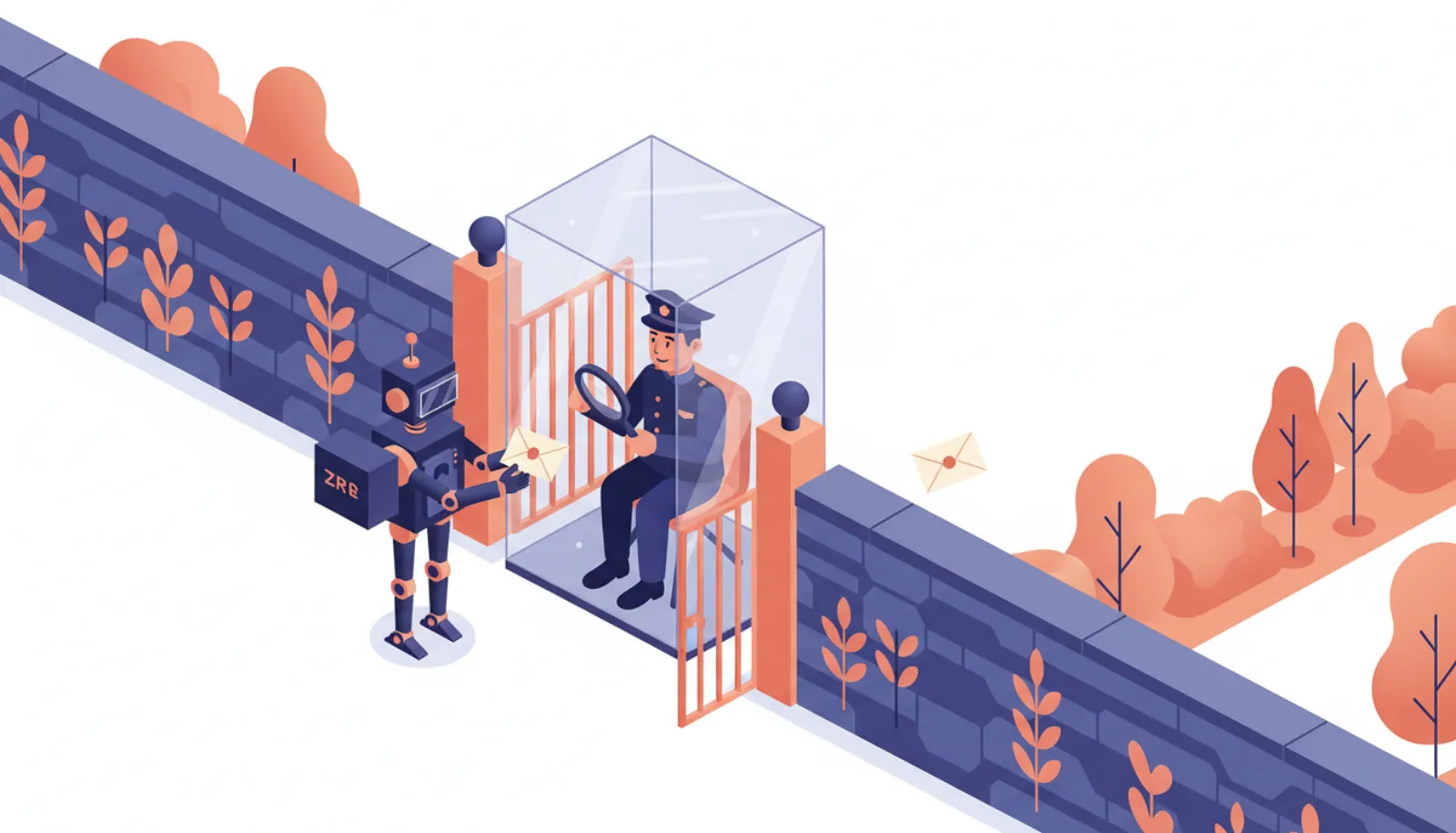
Every major personal AI agent asks before it spends your money, but what it will do without asking varies a lot. Meta Muse lets you hand out standing approvals, including perpetual ones. OpenAI dots and Grok Bot let you write rules. Claude Duet asks before every payment and refuses some actions even with your approval. This comparison is based on each vendor's published safety documentation as of November 2026, not hands-on testing.
Why do approval rules matter?
A personal agent acts with your accounts. If it misreads a request, or a web page plants instructions in it (see prompt injection explained), the approval step is often the last moment you can stop it.
The trade-off is friction. Reviewers of OpenAI dots complained about too many confirmations on a simple booking. Muse's best-known incident went the other way: a user had granted a permission that let the agent share his home address with a Marketplace buyer, according to MakeUseOf. The right setting depends on how much you trust the agent with each kind of action.
- Agent plans an action
- Rules check (yours + vendor's)
- Act, ask you, or block
- Logged in activity view
Approval rules at a glance
| Meta Muse | OpenAI dots | Claude Duet | Grok Bot | |
|---|---|---|---|---|
| Approval layer | Sentinel (separate agent) | Auto-review plus Custom Rules | Approval screen plus intent classifier | Allow/Deny prompts plus Auto Review |
| Standing approvals | One-time, session, task, time-bounded, perpetual | "Act without asking" or "act if pre-approved" per rule | Not documented | "Always allow" (desktop) |
| Purchases | Every purchase needs approval | Saved-card purchases need approval | Always asks before paying | Payments via takeover flow |
| Always comes back to you | Purchases | Password changes, money transfers | Paying, deleting an order, creating an account | Passwords, 2FA, CAPTCHAs, payments |
| Refused even with approval | Not documented | Not documented | Trading securities, moving money between accounts, accessing someone else's account | Not documented |
| Payment method | Link by Stripe single-use cards | Saved card | Link and Shop Pay one-time cards | Takeover, you enter details |
As of November 2026. "Not documented" means we did not find it in the vendor's published material, not that it is allowed.
How does each agent decide when to ask?
Meta Muse: Sentinel and granular grants
Meta routes every connector action through Sentinel, a separate agent that reviews what Muse is about to do. According to Muse's safety post, you can approve an action once, for a session, for a task, for a set time or perpetually. Every purchase needs approval, and payments run through Link by Stripe single-use cards. Muse cannot see your passwords or payment methods, and its email connector filters one-time codes and password reset links. More detail in Meta Muse Sentinel explained.
The risk is the perpetual option. It is convenient for repetitive tasks but is exactly what the Marketplace incident involved.
OpenAI dots: Custom Rules and fixed limits
eesel's summary of OpenAI's documentation describes four behaviours you can attach to an action:
- Act without asking.
- Act if pre-approved.
- Ask before acting.
- Hand off to you.
An auto-review step checks planned actions, such as an email's recipients and content, against those rules, and a dot cannot switch it off. Proactive research is read-only, enforced in code. OpenAI's safety FAQ adds fixed limits: password changes and money transfers always come back to you, permanent deletes and software installs may need approval each time, and approving one action does not grant ongoing permission.
Claude Duet: show everything, ban the riskiest
Anthropic's Duet safety page says Duet shows the exact action, recipients and content before it sends, pays, signs or deletes. Paying, deleting an order and creating an account always ask. Three categories are prohibited even with your approval: trading securities, moving money between accounts and accessing someone else's account. A separate classifier checks intent. Purchases use Link or Shop Pay one-time cards.
Grok Bot: allow lists with an override
Cursor's Grok Bot docs list Allow once, Deny and Always allow on desktop, and Approve once or Deny on iPhone. Require Approval rules override Always Allow, and an Auto Review option exists. Passwords, 2FA, CAPTCHAs and payments go through a takeover flow where you act directly. Local desktop commands default to "Ask every time." The xAI FAQ warns: "Do not use separate Bots as a security boundary," because all Bots on an account share one computer.
- Muse approval durations, from one-time to perpetual
- 5
- dots Custom Rule behaviours
- 4
- Actions Duet refuses even with approval
- 3
- Shared computer for all of an account's Grok Bots
- 1
Which approach suits you?
You want maximum guardrails
Claude Duet's documented model is the most conservative. It suits people who want to review every send, payment and deletion, and who like the idea of hard bans on financial moves. Read our Claude Duet review.
You want to automate routine tasks
Muse and dots both let you stop being asked about routine actions. Dots make this a rules system with fixed limits underneath; Muse uses time-bounded and perpetual grants. Prefer time-bounded or task-scoped grants over perpetual ones.
You run several agents for different jobs
Grok Bot lets you create multiple Bots, but they share one computer and one set of logins. Treat them as one agent from a security point of view.
You are in the UK
UK data protection rules still apply when an agent acts for you. The ICO's guidance stresses least privilege: give an agent access only to what a task needs. Our sister site explains your ICO data rights with AI agents.
Bottom line
None of the big four will spend your money without some form of confirmation, according to their published documentation. The differences are in standing permissions: Muse and Grok Bot let you grant open-ended approvals, dots wrap automation in rules with fixed limits, and Duet keeps the human in the loop for the riskiest actions. For practical settings advice, read our AI agent safety and permissions guide and our explainer on how agent payments work.