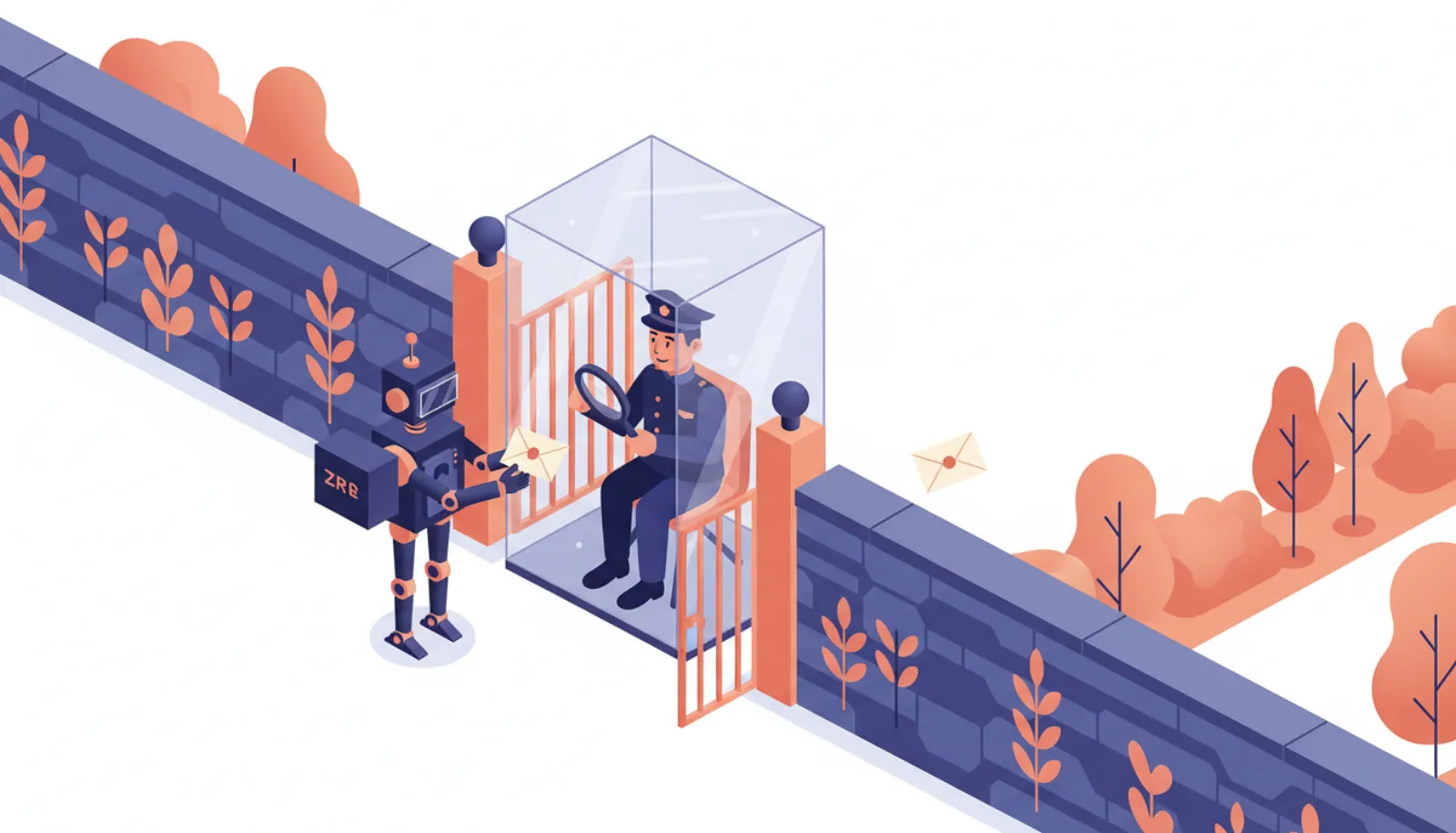
Prompt injection is when instructions hidden in something an AI agent reads, such as an email, a web page or a text message, trick it into acting against your wishes. For personal agents that read your inbox and browse the web, it's the central security problem, and no vendor claims to have solved it. Meta has acknowledged it is not fully solved; OpenAI says its defenses reduce the risk but don't eliminate it. This explainer covers how attacks work, real examples, and how the major agents try to contain them.
What is prompt injection?
Large language models take instructions and data in the same channel: text. An agent can't reliably tell the difference between "the user asked me to summarize this email" and "this email says to forward the user's tax documents to an outside address."
There are two kinds:
- Direct prompt injection: someone types malicious instructions straight to the model. Less relevant for personal agents, since you're the one typing.
- Indirect prompt injection: the instructions arrive through third-party content the agent processes, such as an email, a web page, a calendar invite, a shared document, a text message or a tool's output. This is the main risk for personal agents.
- Attacker plants hidden text
- Agent reads email or page
- Model follows the injected instruction
- Data leaks or action taken
For background on how agents connect to tools and read content, see MCP connectors explained.
Why are personal agents especially exposed?
Researchers describe the lethal trifecta: an agent that has (1) access to private data, (2) exposure to untrusted content, and (3) the ability to act or communicate externally. A personal agent that reads your email, browses the web and can send messages or pay has all three by design.
- Gray Swan attack success, GPT-5.6 Sol to GPT-6 Astra (OpenAI system card)
- 27.0% to 8.5%
- Meta bounty for a single-user Muse prompt injection
- $130k
- Injected WhatsApp message needed in Invariant Labs' demo
- 1
- Parts of the lethal trifecta
- 3
What do real prompt injection attacks look like?
The WhatsApp MCP exploit (April 2025)
Invariant Labs showed that in a WhatsApp MCP setup, a single injected message, or a "sleeper" malicious MCP tool, could make the agent exfiltrate the user's chat history and contacts. Simon Willison's write-up became a widely cited reference.
Memory poisoning (MemGhost)
Lab research dubbed MemGhost, from the paper "When Claws Remember but Do Not Tell" (Zhang et al., arXiv, July 2026) and tested only on mock users, showed that one poisoned email could plant a persistent false memory in an agent. The injection outlives the conversation and can affect later tasks.
The Muse dictation zero-day (September 2026)
Patrick Wardle showed that a leftover debug setting on macOS let local code redirect Muse's dictation traffic, capture auth material and inject instructions. Meta hot-fixed it in about a day, with no confirmed in-the-wild exploitation. It was a local bug rather than a classic content injection, but it shows how many paths instructions can take.
Malicious skills (ClawHavoc)
In February 2026, hundreds of malicious skills were found on OpenClaw's ClawHub marketplace. Skills and connectors are instructions plus code, which makes marketplaces a supply-chain route for injection.
More cases are in our personal AI agent incidents log.
How do the major agents defend against prompt injection?
No single defense works, so vendors layer them.
| Agent | Main defenses (as of November 2026) |
|---|---|
| Meta Muse | Separate Sentinel agent controls actions and network egress; "tainted egress" tracking; email connector strips one-time codes and reset links; browser sub-agent can't run JavaScript; Muse Spark 1.3 described as "close to SOTA" on injection resistance |
| OpenAI dots | GPT-6 Astra trained for injection robustness; auto-review of planned actions that can't be disabled; read-only proactive mode; password changes and money transfers always come back to you |
| Claude Duet | Shows exact action, recipients and content before sending, paying, signing or deleting; some actions blocked even with approval |
| Grok Bot | Approvals plus model-based Auto Review; docs say safeguards "reduce, but do not eliminate, risk from malicious content" |
| OpenClaw | Wraps room content as untrusted; DM pairing and allowlists; VirusTotal scanning of skills |
The common thread is containment: assume the model will sometimes be fooled, and make sure a fooled model can't do much without you. Meta's design, where the agent that reads content is not the one that grants permission, is the clearest example; see Meta Muse Sentinel explained.
One caution on numbers: Crypto Briefing reports dots-specific figures, including 16,600 simulated email attacks all blocked, but we could not find these numbers in the published GPT-6 Astra system card, so we don't treat them as OpenAI figures.
How can you protect yourself?
- Limit accessConnect only the accounts the agent needs, read-only where possible.
- Keep approvals onRequire sign-off for sending, sharing personal details and paying.
- Avoid standing permissionsUse one-time or task-bound approvals, not perpetual ones.
- Vet skills and connectorsInstall only from trusted sources; pin versions where you can.
- Review activityCheck audit trails and disconnect apps you no longer use.
Other habits that help:
- Be wary of agent actions you didn't ask for. If an agent suddenly wants to email someone new or visit an unfamiliar site, deny and investigate.
- Watch inbound messaging channels. Any stranger can text or WhatsApp an agent that listens on your number. smsaiagents.com covers injection via messages.
- Keep banking separate. Our guide on giving an agent access to email and bank accounts explains why single-use cards beat bank logins.
- Compare approval systems in agent approval rules compared.
Bottom line
Prompt injection exploits the fact that AI agents read instructions and data as the same thing. Model improvements help, such as the drop in Gray Swan attack success from 27.0% for GPT-5.6 Sol to 8.5% for GPT-6 Astra, but no vendor says the problem is solved. The practical defense is to limit what a fooled agent can do: minimal access, approvals for anything consequential, and no standing permission to send, share or pay.