Meta Muse can't shop on Amazon because Amazon blocked it on 20 September 2026. Amazon said Meta never notified it, that Muse doesn't identify itself as an agent, and that it appears to store user credentials. Meta disputes the credential claim. As of November 2026, no report says the block has been lifted.
What happened between Amazon and Muse?
Twelve days after Muse launched in the US, Amazon stopped it from shopping on Amazon.com. GeekWire reported the block and Amazon's three stated reasons:
- No notice. Meta never told Amazon that Muse would be shopping on its site.
- No identification. Muse doesn't identify itself as an agent when it visits.
- Credentials. Amazon said Muse appears to store users' credentials.
Meta rejects the third point. Its security post says credentials sit in a vault inside each user's VM, the agent only handles surrogate tokens, and a separate component called Sentinel swaps in real credentials at the network edge. Whether that counts as "storing credentials" depends on whose definition you use, and the two companies haven't settled it in public.
- Amazon adds Agent Terms to its Conditions of Use
- Amazon sues Perplexity over its Comet browser agent
- Court grants Amazon a preliminary injunction against Perplexity
- Meta launches Muse in the US
- Amazon blocks Muse from Amazon.com
What are Amazon's Agent Terms?
On 30 May 2025, Amazon added a section to its Conditions of Use covering automated agents. The core rule is that a shopping agent must identify itself, using the form "Agent/[name]". An agent that browses Amazon while looking like an ordinary browser breaks that rule.
That lines up with the second reason Amazon gave for blocking Muse. It also explains why the dispute is about more than one product. Amazon is asking agent makers to announce themselves and, by its account, to ask first. Our sister site has a full breakdown of Amazon's Agent Terms.
Doesn't robots.txt control this?
Only partly. A robots.txt file tells automated visitors which parts of a site they shouldn't access, but it is advisory. Search Engine Journal's headline put it bluntly: when Amazon blocked Muse, robots.txt "had nothing to say".
As of 10 November 2026, amazon.co.uk/robots.txt gives "Disallow: /" to 99 named user agents. They include meta-externalagent, meta-externalfetcher, ChatGPT-User, Claude-User, Perplexity-User, xAI-Grok and GrokBot. There is no entry called "meta-muse". We haven't counted the entries on amazon.com's own file.
The harder question is whether an agent acting for one person is a crawler at all. Agent makers argue that a user-directed agent is closer to a browser than a bot. Amazon argues it is automated access it can refuse. That question sits at the centre of its lawsuit against Perplexity.
How does the Perplexity case fit in?
Amazon sued Perplexity in November 2025 over Comet, Perplexity's agentic browser, under the federal Computer Fraud and Abuse Act and California's computer-fraud law. On 9 March 2026, Senior US District Judge Maxine Chesney (N.D. Cal.) granted Amazon a preliminary injunction, as Search Engine Journal reported. Perplexity appealed to the Ninth Circuit the next day.
What happened after that is less settled in our sources. The Next Web reports that the Ninth Circuit lifted the injunction on 4 August 2026, holding that the user, not the AI company, accesses Amazon's systems, and that rehearing was denied on 10 September. It also reports that Amazon filed an amended complaint on 21 September alleging that Comet for iOS copies users' Amazon session cookies to Perplexity's cloud. We have not confirmed the appellate steps against court records, so treat them as reported.
The Muse block is not part of that lawsuit. It's a business decision by Amazon, and it came the day before the reported amended complaint.
Is Muse the only agent Amazon blocks?
No. Cybernews reports that Amazon's rules block many AI agents, including Grok. The robots.txt list above names agents from OpenAI, Anthropic, Google, Microsoft, Perplexity and xAI.
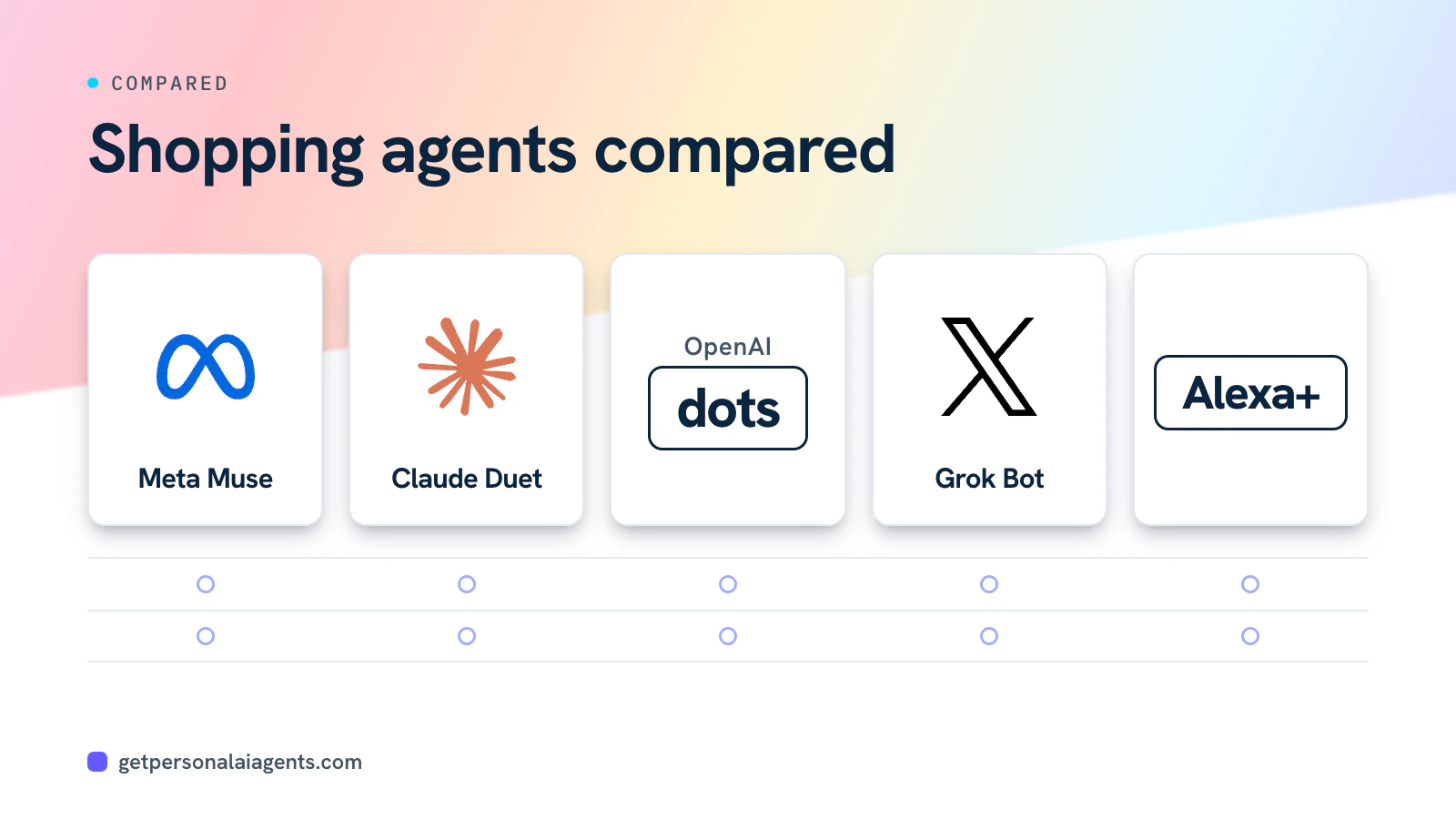
| Agent | Amazon status (as of November 2026) | How it presents itself to sites |
|---|---|---|
| Meta Muse | Blocked since 20 September 2026 | Amazon says it doesn't identify itself |
| Claude Duet | Not documented for Amazon; Anthropic says some large sites block it | Distinct User-Agent; Anthropic publishes its IP addresses |
| Grok Bot | Cybernews says Amazon's rules block it | Hands payments and logins to you via takeover |
| Alexa for Shopping | Amazon's own assistant | Built into Amazon |
Anthropic takes the opposite approach to the one Amazon criticised. Its Duet safety article says Duet's browser sends its own User-Agent header and that Anthropic publishes the IP addresses it browses from. Anthropic still says some large sites block it.
Will the block be lifted?
There's no public sign of it. Neither company has announced talks, and no report since 20 September says Muse can shop on Amazon again.
The direction of travel is toward agents proving who they are. Web Bot Auth is an IETF draft, with Cloudflare and Google authors, in which agents sign their HTTP requests so a site can verify the operator. It verifies the company running the agent, not the person using it. Cloudflare announced a Trusted Agent Delegation coalition on 5 November 2026. If Meta adopted something like this, it would answer Amazon's identification complaint, though not necessarily the notice or credential points.
What can Muse users do instead?
- Use other retailersRetail Gazette reports Muse's US partners include Walmart, Best Buy, Gap and Sephora.
- Use Amazon's own assistantAlexa for Shopping, which merged Rufus and Alexa+ in May 2026, works inside Amazon.
- Compare, then buy yourselfAsk Muse to research a product, then complete the Amazon order by hand.
- Check other stores firstOur sister site tracks which stores allow AI agents.
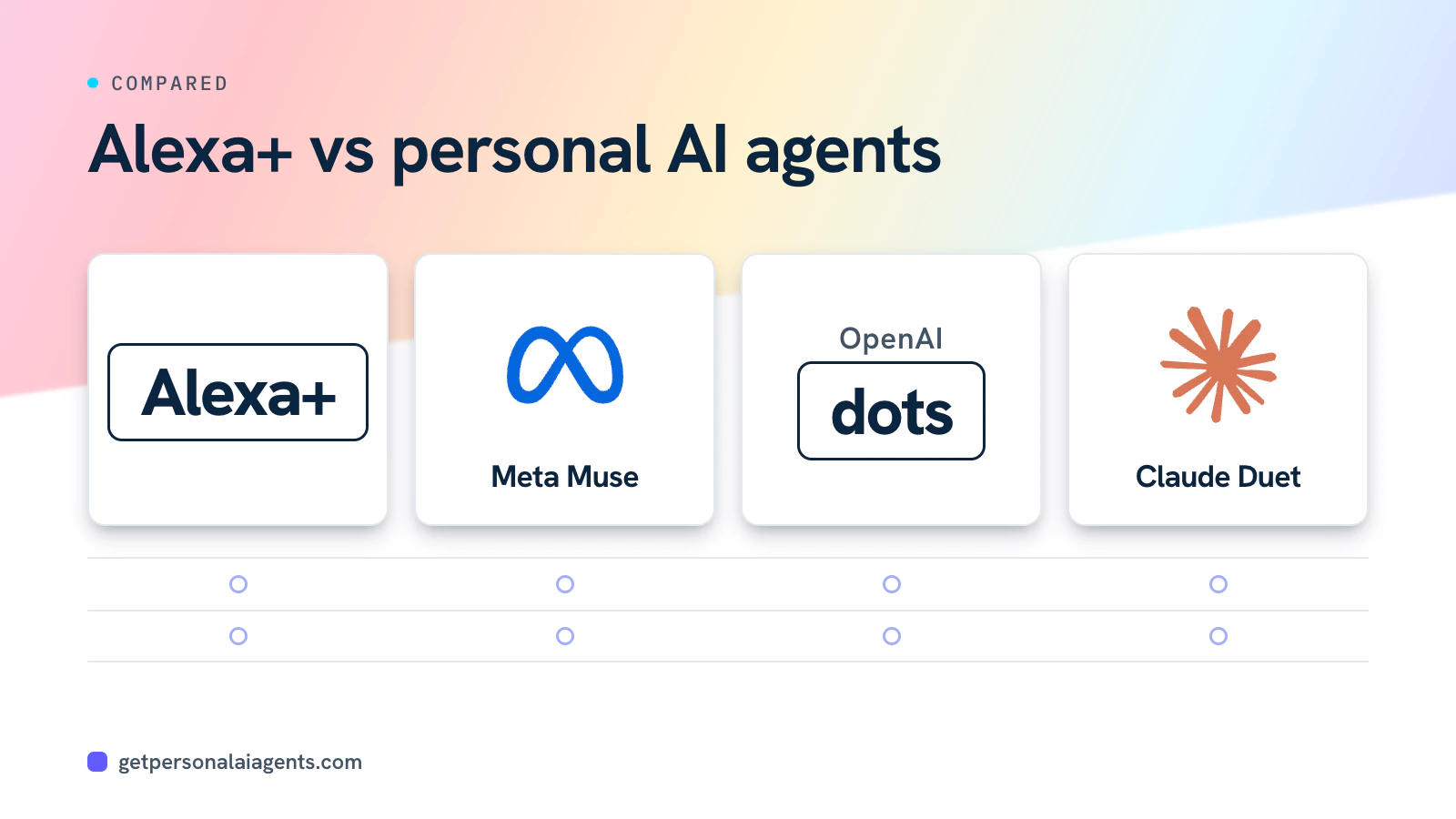
The third option keeps Muse useful without breaking anything. Muse can compare prices and reviews, and you can then buy on Amazon yourself. For a store-by-store view, see which stores allow AI agents. Our AI shopping agents guide and the Alexa+ comparison cover the alternatives. If you're new to how Muse pays, read Muse payment methods.
Bottom line
Amazon blocked Muse because, in Amazon's words, Meta didn't ask, Muse doesn't say what it is, and it appears to keep credentials. Meta disputes the last point. Amazon's Agent Terms require agents to identify themselves, and robots.txt can't settle the fight on its own. Until something changes publicly, plan on Muse not shopping at Amazon. Our Muse review and incident log are updated as the story moves.